All Posts By

Steve Percy

cyber article image compressed

The Attacks Won’t Stop. It’s Time PNG Businesses Did Something About It.

By Superfast IT Networks No Comments

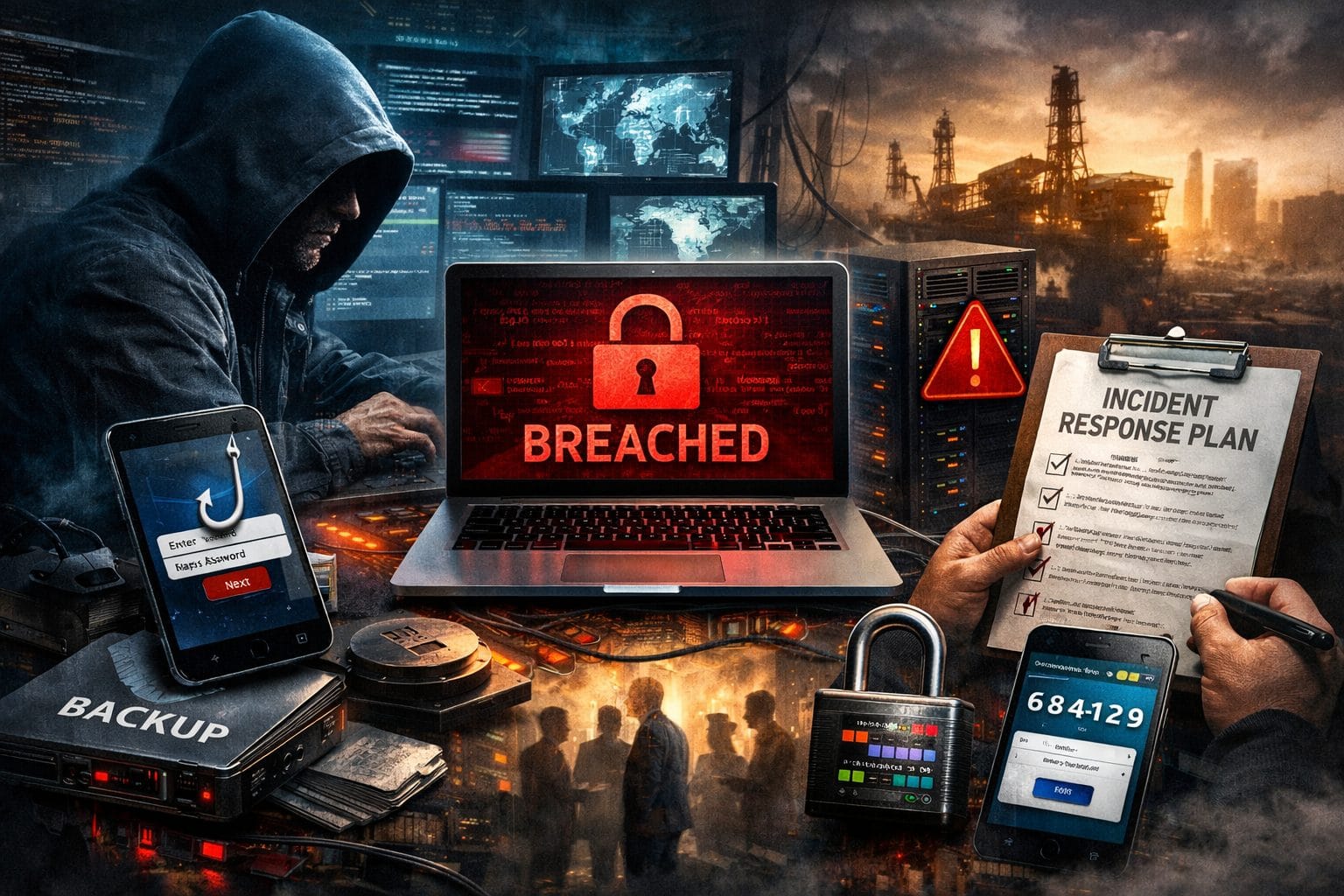
Most cyberattacks are not sophisticated. They don’t need to be.

Attackers use automated tools that scan every corner of the internet, around the clock, looking for one thing: an easy way in. A weak password. An unpatched system. An employee who clicks the wrong link. Find one, and they’re inside your business—often before anyone notices.

The businesses that survive cyberattacks—and increasingly in PNG, businesses are surviving them, or not—aren’t necessarily the ones with the biggest IT departments. They’re the ones that fixed the basics before the attack came.

This is your practical starting point.


Understand What Attackers Are Actually Looking For

Before you can defend your business, you need to think like the threat. Attackers aren’t looking to challenge themselves. They’re looking for the path of least resistance. And across the Asia-Pacific region—which now attracts more cyberattacks than anywhere else on earth—that path runs through businesses that have never properly locked the doors.

The entry points are almost always the same: stolen or guessable credentials, software that hasn’t been updated in months, staff who haven’t been trained to recognise a phishing email, and systems with no monitoring in place. Fix these, and you eliminate the vast majority of your risk.


The Five Controls That Actually Matter

Security frameworks can run to hundreds of controls. For most PNG businesses, these five will do more to reduce real-world risk than anything else.

1.   Multi-Factor Authentication

MFA requires users to verify their identity beyond just a password—typically a code sent to their phone or an app confirmation. It is the single most effective technical control available. Microsoft’s data shows MFA blocks over 99% of automated account compromise attacks. Turn it on for email, banking, cloud storage, and any remote access to your network. Do it this week.

2.   Patch Management

When software vendors release security patches, they are also publishing a map of the vulnerabilities they’ve just fixed—and attackers read that map. Unpatched systems are a primary entry point for compromise across the region. Set a monthly schedule. Prioritise anything internet-facing. In PNG, where bandwidth constraints make large updates inconvenient, schedule patches during off-peak hours—but don’t skip them.

3.   Tested Backups

Ransomware is one of the most destructive threats facing PNG businesses—but its power is almost entirely dependent on your having no clean copy of your data to restore from. Apply the 3-2-1 rule: three copies of your data, on two different media, with one stored offsite or in secure cloud storage. Critically—test your restoration process every quarter. Backups that have never been tested are not backups.

4.   Staff Training

Phishing—emails, messages, or links designed to trick staff into handing over credentials or installing malware—remains the number one entry point for attacks globally. AI is now making phishing messages harder to spot than ever. In PNG’s mobile-first, WhatsApp-and-Facebook business culture, these attacks don’t only arrive via email—they come through every channel your team uses.

Thirty minutes of practical security training every quarter—what to look for, what to do when something seems wrong, who to call—changes your risk profile significantly. The cost is minimal. The impact is not.

5.   An Incident Response Plan

When an attack happens—and for a growing number of PNG businesses, it will—the organisations that recover fastest are the ones that knew what to do before the crisis hit. Your plan doesn’t need to be complex. It needs to answer four questions: Who do we call first? Who has authority to take systems offline? How do we communicate with staff and customers? What are our legal and regulatory obligations?

Write the answers down. Share them with your leadership team. Review them annually. That’s it.


Why PNG Businesses Face a Higher Bar

Every business faces cyber risk. PNG businesses face additional headwinds that make the basics harder to get right.

Intermittent connectivity creates patching gaps and makes cloud-based security tools less reliable. A shallow local talent pool means expert help is hard to find quickly when something goes wrong. And PNG’s rapid digital growth is outpacing security investment—a gap that both criminal and state-sponsored actors are actively exploiting across the Pacific.

This context doesn’t change what needs to be done. It changes how urgently it needs to happen—and how much it matters to work with a partner who understands the local environment, not just global frameworks.


The Regulatory Landscape Is Shifting

PNG’s National Cyber Security Strategy sets a clear direction of travel. Businesses that handle customer data, financial records, or government contracts will face increasing pressure to demonstrate minimum security standards. This isn’t a distant prospect—it’s already shaping procurement decisions and partner requirements across the region.

The businesses building these foundations now are making a strategic investment. When compliance requirements tighten, they won’t be starting from zero.


Cybersecurity is not a technology problem. It’s a business decision. And in PNG in 2025, it’s one that can no longer be deferred.

Ready to Take Action? Sprint Networks is hosting SecurePNG—a practical, hands-on cybersecurity workshop built specifically for PNG business owners and IT managers.

You’ll walk away with a clear picture of where your business is exposed and a prioritised plan to fix it.  Register for the SecurePNG Workshop Seats are limited.
Don’t wait for an incident to force your hand.

ChatGPT Image Feb 13 2026 03 33 47 PM

Cybersecurity in PNG: Why Your Business Can’t Afford to Wait

By Network Security, PNG, Superfast IT Networks No Comments

In January 2025, Papua New Guinea’s Internal Revenue Commission was hit by a cyberattack that shut down its entire tax administration system for nearly two weeks. Phones went dead. Emails stopped. Sensitive financial data belonging to businesses across the country was potentially exposed.

It wasn’t a one-off. In 2021, PNG’s Department of Finance was crippled by ransomware. In February 2025, the Bank of PNG suffered its own cyber incident. And just weeks ago, Samoa’s Computer Emergency Response Team formally warned the Pacific region about APT40—a Chinese state-backed hacking group actively targeting Pacific Island networks.

This is the reality of doing business in PNG in 2025.

The Region Is Under Attack

The Asia-Pacific region now attracts more cyberattacks than anywhere else on earth—34% of all global incidents in 2024, according to IBM’s X-Force Threat Intelligence Index. Ransomware, business email compromise, phishing, and state-sponsored espionage are all rising sharply.

For PNG businesses, this isn’t background noise. It’s your operating environment.

The Threats You Need to Know

Ransomware is the most destructive. Attackers encrypt your data and demand payment to restore it—often after stealing it first. The average recovery cost globally now exceeds $4.9 million, excluding the ransom itself. Recovery takes weeks. Some businesses never fully recover.

Business Email Compromise (BEC) is the most financially damaging scam targeting businesses today. Attackers impersonate a CEO, supplier, or finance contact and redirect payments. No malware needed—just a convincing email. The FBI estimates BEC has caused over $50 billion in global losses.

Phishing remains the most common entry point for attacks. One click on a malicious link can hand attackers the keys to your entire network. In PNG’s mobile-heavy, social media-driven business culture, the risk is amplified.

Why PNG Businesses Are Especially at Risk

Three factors make PNG businesses more vulnerable than most:

Infrastructure constraints- Intermittent connectivity and bandwidth limitations mean security patches get skipped, cloud-based protections don’t always work reliably, and incident response takes far longer than it should.

Limited local expertise- Qualified cybersecurity professionals are scarce in PNG. When something goes wrong, getting the right help quickly is difficult—and attackers know it.

The “too small to target” myth- Automated tools scan the entire internet continuously, looking for vulnerable systems. Your size doesn’t protect you. A Cisco study found that 56% of Asia-Pacific SMBs experienced a cyber incident in the past year. Of those, 75% lost customer data.

What's Changing

PNG launched its National Cyber Security Strategy in 2024. Data protection regulations are tightening. Businesses that handle customer data, financial records, or government contracts will increasingly be expected to demonstrate minimum security standards.

Getting ahead of this isn’t just about compliance—it’s about protecting your business, your customers, and your reputation.

Where to Start

Most successful cyberattacks exploit a small set of basic vulnerabilities: weak passwords, unpatched software, untrained staff, and no backup plan. Fixing these doesn’t require a massive budget. It requires a structured approach and the right guidance.

The businesses that fare best aren’t necessarily the ones with the biggest IT departments. They’re the ones that take cybersecurity seriously before an incident forces them to.

Papua New Guinea’s digital economy is growing. So is the threat. The question is whether your business is keeping pace.

Ready to Take Action?

Sprint Networks is hosting SecurePNG—a practical, hands-on cybersecurity workshop designed specifically for PNG business owners and IT managers.

You’ll walk away knowing exactly where your business is exposed and what to do about it.

Register for the SecurePNG Workshop →

Seats are limited. Don’t wait for an incident to force your hand.
SDN possibilities 2 1

Boosting Business Connectivity: Harnessing the Potential of Versa SD-WAN in the Pacific and ANZ Region

By Pacific, PNG, SD-WAN, Titan, Versa, Versa Networks No Comments

Boosting Business Connectivity: Harnessing the Potential of Versa SD-WAN in the Pacific and ANZ Region

Potential of Versa SD-WAN in the Pacific and ANZ Region

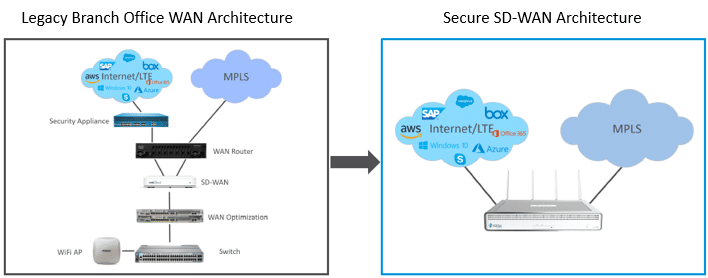
In the ever-evolving Pacific and ANZ region, businesses need a sturdy networking solution to tackle their distinct connectivity hurdles. This is where Versa SD-WAN steps in – a revolutionary solution that brings a host of benefits including superior security, effortless scalability, and packet loss reduction through services like Forward Error Correction, packet replication, and deep packet analytics, all in one package. Here’s how Versa ticks all the boxes for a genuine SD-WAN solution.

Unbreakable Security

Versa SD-WAN provides extensive security measures, incorporating next-gen firewalls (NGFW), secure web gateways, end-to-end segmentation and encryption, unified threat management (UTM), and intrusion prevention systems (IPS). These integrated security features remove the need for separate appliances, ensuring robust protection of vital assets and compliance with regulatory requirements. In the Pacific and Australian region, where data privacy and security are of utmost importance, Versa SD-WAN offers peace of mind. Recently, Versa Networks’ CSG5000 enterprise firewalls received a “AAA” rating from CyberRatings.org due to their unmatched performance, demonstrating their exceptional security effectiveness and cost-effectiveness compared to competitors.

Optimal Bandwidth Utilisation

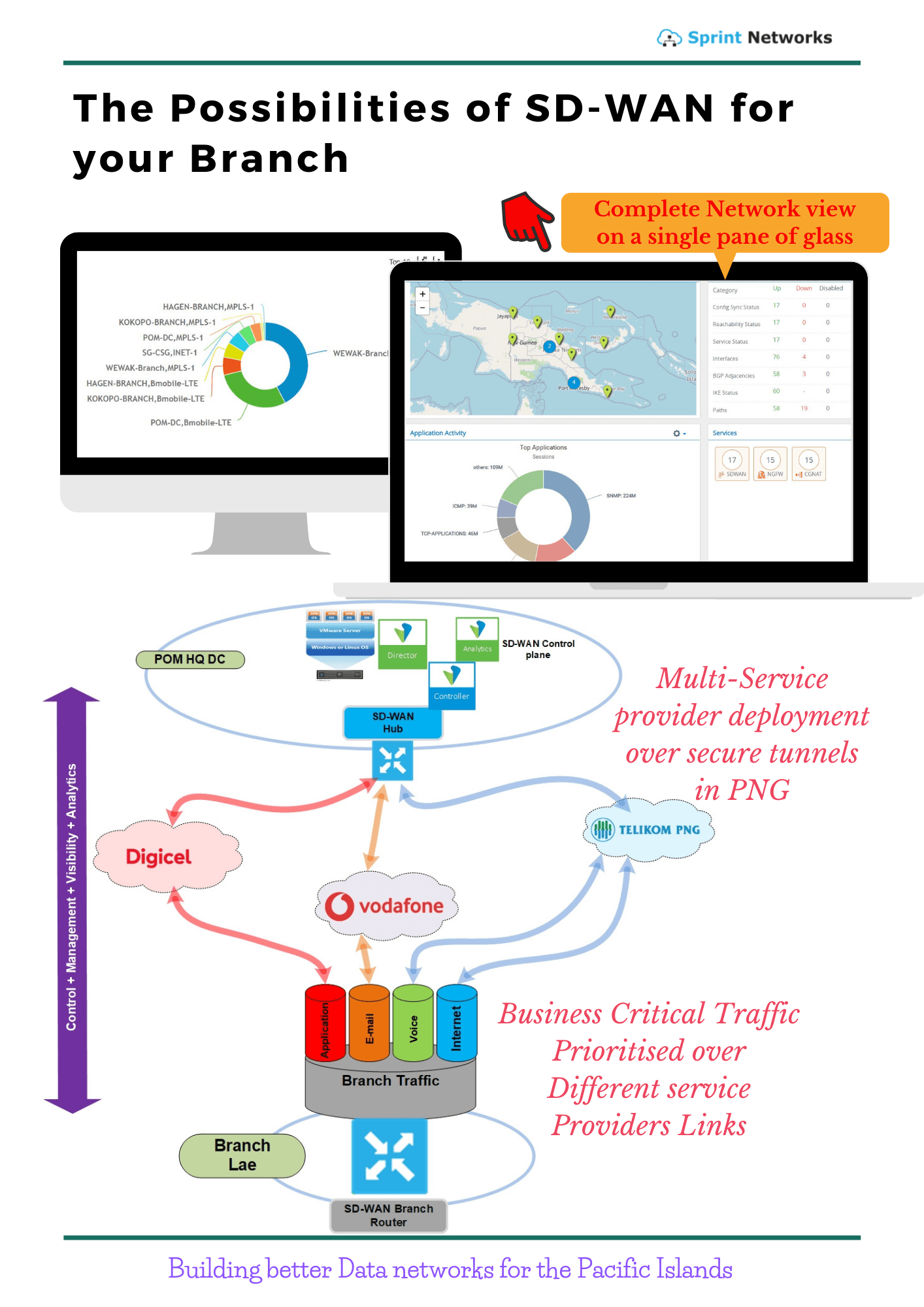
Versa SD-WAN, with its advanced traffic management techniques including application-aware routing and optimisation, maximises available bandwidth and minimises latency. This ensures optimal performance of critical applications and efficient use of network resources through flow aware steering. In the Pacific and Australian region, where reliable and cost-effective connectivity is vital, Versa focuses on delivering better quality of service (QoS) by ensuring key applications receive priority. With real-time traffic monitoring, it also provides visibility into network health, leading to an overall improvement in operational agility, user experience, and business productivity.

Continuous Connectivity with Packet Loss Avoidance

Packet loss can significantly degrade application performance and the overall user experience. Versa SD-WAN directly tackles this challenge with cutting-edge features like Forward Error Correction (FEC) and packet replication. By utilising FEC, Versa can correct transmission errors, reducing the need for retransmission and mitigating the effects of packet loss. These innovative techniques position Versa ahead of its competitors by effectively managing packet loss issues and ensuring continuous connectivity, making it a true SD-WAN solution. These capabilities allow businesses to maintain high-quality connections and deliver exceptional user experiences. 

Data-Driven Decision Making with Versa Analytics

Making data-driven decisions is crucial for optimising network performance and delivering superior user experiences. Versa SD-WAN’s deep packet analytics capabilities provide actionable insights into network performance, traffic patterns, application usage, and security events. Each Versa appliance comes with built-in Versa Analytics, allowing organisations to access real-time data, visualise key metrics, and gain comprehensive visibility into their network from day one. This enables businesses to make informed decisions, proactively identify and address issues, and streamline their network for maximum efficiency, aligning perfectly with an organisation’s growth. In the Pacific and Australian region, where businesses strive for operational efficiency and competitive advantage, Versa Analytics equips ICT managers with the necessary tools to drive success

Scalability for Business Expansion

Versa SD-WAN is designed to seamlessly accommodate business expansion across diverse geographies. It features Zero Touch Provisioning (ZTP) which facilitates quick, hassle-free deployment of SD-WAN devices across multiple sites. As organisations in the Pacific and Australian region strive for growth and market diversification, Versa SD-WAN’s scalability ensures a smooth transition and supports their evolving networking needs. Versa establishes MPLS VPN connections on provider L2VPN or L3VPN circuits by leveraging Multi-Protocol Border Gateway Protocol (MP-BGP) along with proprietary protocols exclusive to Versa. This functionality brings a new level of flexibility and control, enabling organisations to secure their network connections while maximising the efficiency of their telecommunications circuits.

In conclusion, Versa SD-WAN is a powerful and innovative networking solution adept at addressing the unique connectivity challenges faced by organisations in the Pacific and Australian region. With its impressive advantages in enhanced security, bandwidth optimisation, packet loss avoidance, insightful analytics, and seamless scalability, Versa distinguishes itself from its competitors. By adopting Versa SD-WAN, businesses can confidently navigate the dynamic digital landscape and unlock the true potential of their networks.

Protect Medical IT

The Most Wanted Cyber Security Tools for Your Medical Practice

By Network Security, Superfast IT Networks, Titan No Comments

How Vulnerable are Medical Practices in Australia?

Medical practices in Australia are increasingly reliant on technology to store and share patient information. This reliance has made them a target for cybercriminals, who have attempted to access patient data through malware and ransomware attacks. Cyber security is therefore an important consideration for any medical practice, in order to protect the confidentiality of patient information.

The criticality of services delivered by the health sector is of high importance and any disruption of service could be catastrophic. Therefore, more the reason for medical practices to adopt sound security solutions to keep themselves always online and protected. 

Covid-19 has further changed the landscape of the medical industry. Patients have increased the use of telehealth facilities, which require a stable and secure connection. Any vulnerabilities, in the network, could be utilized by a potential attacker. Changes to social and working environments, such as working from home, have made the public vulnerable to cyber attacks.


The Current Threats Facing Australian Medical Practices

Malware downloaded from malicious emails or websites is the most common type of security incident that medical practices are experiencing. Many medical practices are seeing a wide variety of other attacks, as well, including:

  • Unauthorized access and hacking incidents.
  • Theft of customer data, including credit card information.
  • Ransomware attacks.
  • Theft of critical business data and electronic files by external parties and insiders.
Cyber Security Tools

How you can Keep your Practice Safe from Cyber Attacks?

We recommend Six (6) security capabilities for Healthcare and medical practices to deal with the ever-expanding threat landscape:

  • Zero-Trust Network Access (ZTNA) – No one is trusted with your patient data unless they are verified and authenticated by this tool. Here, you get to decide who has access and who does not.
  • Secure Web Gateway (SWG)- Protecting all devices at your practice from malware and other threats by preventing users from accessing malicious website traffic on the internet.
  • Remote Browser Isolation (RBI)- Providing your practice with risk-free Internet access 24/7. This keeps untrusted browser activity as far away as possible from the PCs and Laptops used at your practice. This will help protect your practice against data loss, theft or misuse.
  • Next-Generation Firewall (NGFW)- will protect your most valuable assets from cyber attacks. This is a must-have for medical practices in Australia as they are your best line of defence against hackers and cyber threats.

How we can help your Medical Practice?

  • Secure and uninterrupted Internet connectivity for you medical practice
  • Protection from cyber threats, malware and viruses so that your patient data is always safe and secure
  • Better application performance for your critical medical applications at all times
  • Secure access to your important medical data from anywhere
  • Periodic backup of patient data and records to a secure platform
  • Secure and reliable connectivity between multiple medical branches if you own more than one
IT Solutions for Small and Medium Businesses 2
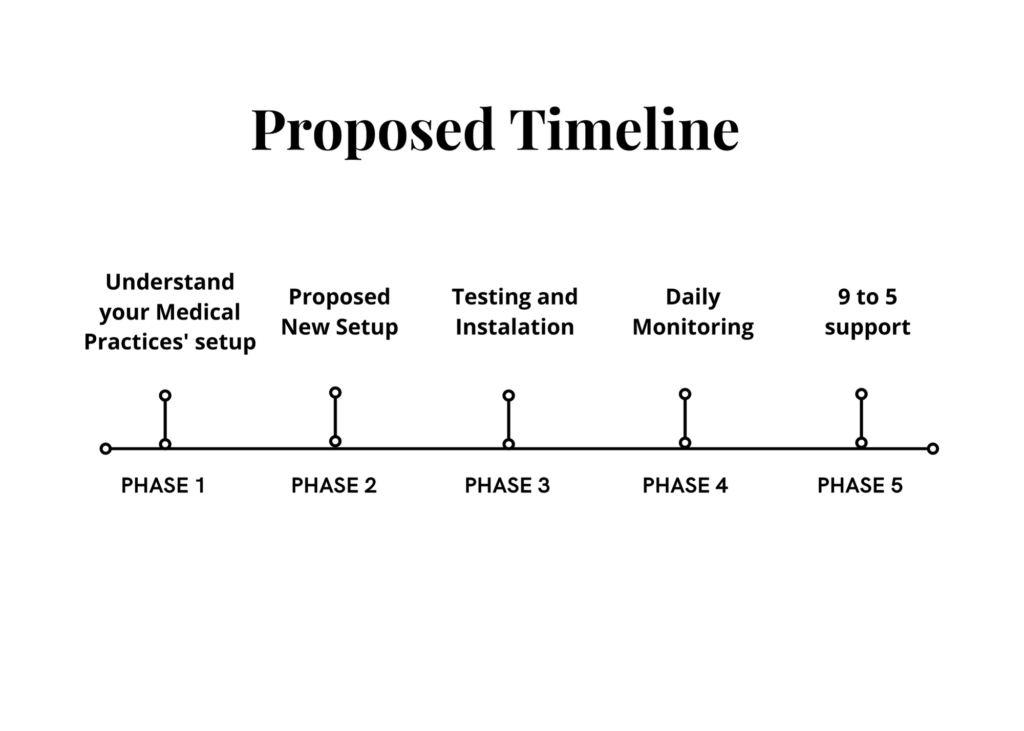
Understand your Medical Practices setup

Reach out to us at- info@sprintnetworks.com and we can provide your medical practice with the best solution to address all your Internet and cybersecurity woes.

IT Solutions for Small and Medium Businesses 2

How a Secure Web Gateway Can Help Protect Patient Data

By Superfast IT Networks, SASE No Comments

The Importance of Cyber Security in Healthcare

Who is at Risk?

Your healthcare business or practice has access to valuable digital information entrusted to you by healthcare consumers, suppliers and employees. The information and systems your organisation uses to access and store this information are critical to its ability to operate. 


If criminals compromise your computer systems or steal important patient information, there is a huge risk that your business may suffer significant financial loss, possible legal liability, and reputational damage and your customers’ personal information may be misused for fraudulent purposes. Some cyber attacks may cause you to lose access to critical business systems or can put your business offline. Medical practices would be held responsible in such cases and the repercussions could be too much to handle.

Secure Web Gateway

Secure Web Gateway and why it Matters

Here we talk about one such tool that can help medical practices keep their patient data secure and protected 24/7.

Strict privacy laws bind medical practices in Australia. As a result, it’s recommended for doctors and other healthcare professionals to use a Secure Web Gateway(SWG) when accessing confidential patient information. By using an SWG, medical practices can ensure that sensitive patient data is protected from unauthorized access.

In this blog, we’ll explore how an SWG can help medical practices in Australia protect patient data. We’ll discuss the importance of cyber security for medical practices and the benefits of using an SWG.

In this blog, we’ll explore how an SWG can help medical practices in Australia protect patient data. We’ll discuss the importance of cyber security for medical practices and the benefits of using an SWG.

Medical practices handle confidential patient information on a daily basis. This information includes things like medical records, prescriptions, and test results. In order to protect this sensitive data, medical practices must have strong cyber security measures in place.

What is an SWG?

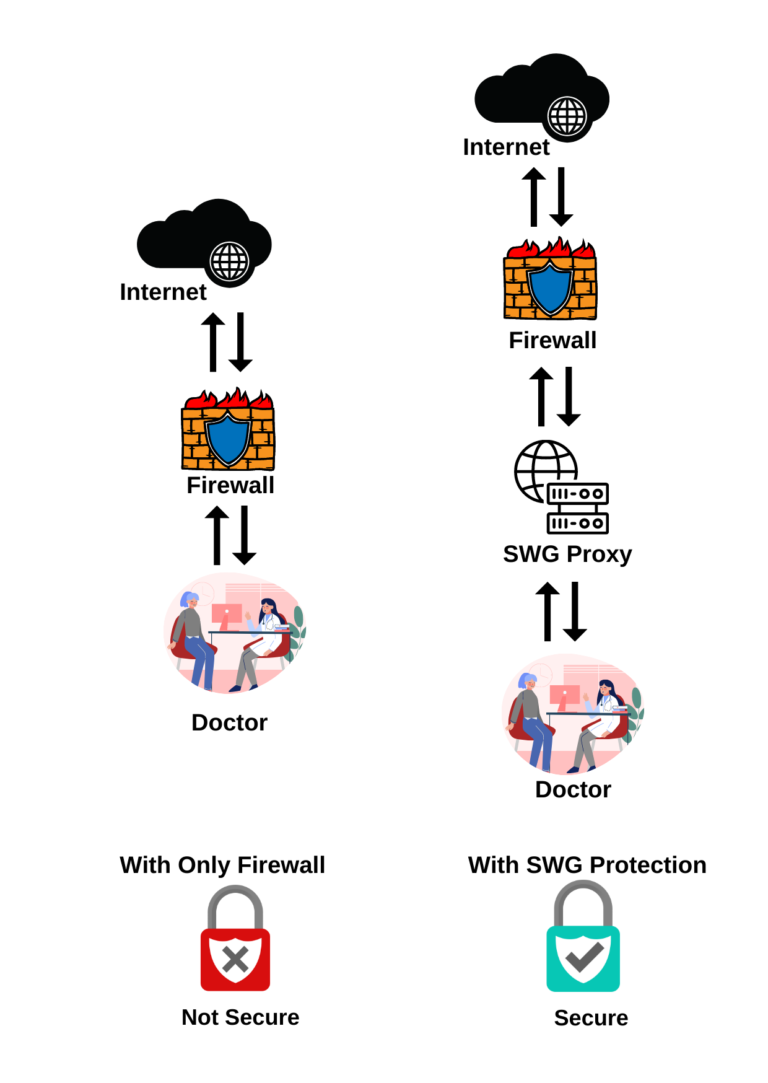
An SWG is a tool that provides security for internet traffic. It acts as a barrier between a company’s network and the internet, filters out malicious traffic, protects against threats and secures sensitive data.

There are many benefits to using a secure web gateway for medical practices. First, it can help to prevent data breaches. If confidential patient information is stolen, it could be used for identity theft or other fraud. A secure web gateway can also help to protect against malware and other threats. By blocking malicious traffic, a secure web gateway can help to keep computers and devices used by medical staff safe from infection, and threats and also prevent data breaches.

How Does a Secure Web Gateway work?

SWG protects doctors’ internet-connected devices from internet-born threats. When a doctor accesses the internet, the secure connection goes through a user device to a secured cloud gateway to all public clouds, private clouds, consumer apps or any data centre. The connection is end-to-end encrypted and secured.

SWG

A secure web gateway is an important part of any medical practice’s cyber security strategy. By using a secure web gateway, medical practices can protect patient data from unauthorized access and keep their computers and devices safe from malware and other threats.

In this blog, we explored how a secure web gateway can help medical practices in Australia protect patient data. We discussed the importance of cyber security for medical practices and the benefits of using a secure web gateway. Finally, we provided some tips on how to choose the right secure web gateway solution for your medical practice. Secure Web Gateway solution is the best choice for medical practices looking to improve their cyber security strategy. It offers protection against data breaches, malware, and other threats. It is also easy to use and manage, and it fits within your budget.

Reach out to us at info@sprintnetworks.com if you would like to talk to us about this solution for your practice.