All Posts By

Steve Percy

SASE The answer to securing a distributed workforce. 4

How SASE can secure a hybrid/distributed workforce?

By SASE, Cloud Computing, Network Security No Comments

How SASE can secure a hybrid/distributed workforce?

Security in the cloud is the way forward

One of the biggest challenges for IT teams in today’s world is ensuring that security is applied consistently across a globally distributed workforce. The main drivers of this change can be attributed to edge computing, the cloud and Covid-19. These drivers have caused the modern workforce to become highly distributed/de-centralized and perimeter less. 

So, what is meant by ‘distributed’?

Users are working from anywhere and are connecting to resources that are also highly distributed, such as multiple clouds, containers and SaaS applications as well as traditional DCs. Both users and applications are scattered in multiple clouds as well as the data center, and this makes no sense to have a centralized form of security in place.

What does this do to the “Hub and Spoke” topology?

This makes the H-S topology OBSOLETE. Before, users used to connect to the DC over a VPN, but now that does not work because the DC does not look like it used to. This requires securing the WAN through a cloud-native approach, replacing the need to run security at the old centralized datacenter. 

How SASE can secure a hybrid/distributed workforce?
SASE The answer to securing a distributed workforce. 5

This creates multiple challenges for IT teams trying to secure all the endpoints.Tackling this challenge begins with ensuring security consistent policy is enforceable across the entire network. This requires a full package of solutions that work together in tandem to detect and manage threats. An NGFW will not be able to handle threats at such a level. The solution relies on creating a universal security platform that includes a broader array of security tools than ever before, including web application firewalls and a secure SD-WAN solution that converges security with essential networking functions like cloud-on-ramp, application acceleration and traffic prioritization. 

Even when a security platform that provides all the solutions is available, it only extends to the LAN, datacenter, WAN and cloud edges. But, over the last one year, Covid-19 has pushed organizations to adopt an aggressive WFH policy. So, while this secure the traditional environments, securing remote workers becomes an absolutely crucial requirement.

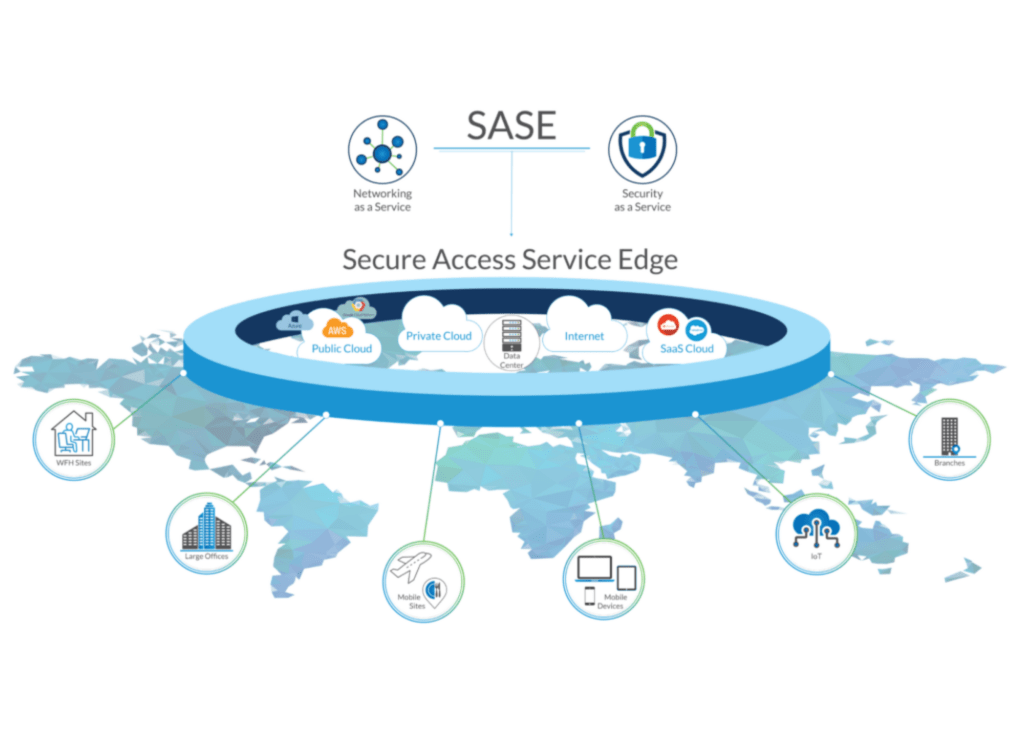
SASE allows an organization to extend the same security functionality at not just the LAN or datacenter edge, but also at the branch edge and public cloud edges to secure the hundreds and thousands of workers. This is what SASE is all about. It treats each and every user/endpoint as a branch and the only way a user can get access to a service or application is by authenticating oneself through encrypted keys. 

A cloud-based SASE solution, built around an enterprise-grade security platform- is a great solution for managing a remote/hybrid workforce. This eliminates the need for a user to create a VPN tunnel back into the corporate network, and then backhaul all of that traffic out to the cloud-based application and other services and back. With SASE, remote workers will be directed through secure connection to the applications and services they need through a highly secure SASE cloud.

This ensure that a proper security framework is in place to support the next level of digital transformation. Being able to connect from anywhere, while being secured 24/7, is the way to go to create a safer and more secure digital world.

Top SD WAN trends to look out for in 2021 1

The top 5 SD-WAN trends to look out for in 2021

By SD-WAN, Superfast IT Networks No Comments

The top 5 SD-WAN trends to look out for in 2021

Organizations is the Asia-Pacific region have already started warming up to SD-WAN for a while now. This is intended to support cloud-based workloads and to reduce their reliance on expensive MPLS circuits. The market in Australia has been very receptive to this technology over the last coupe of years and the uptake will reach peak figures in a couple of years.

Here are the top 5 SD-WAN trends you could look forward to in 2021:

1. SASE shows the way forward

For enterprises to make a complete transformation from legacy WAN, a drastic transformation of the WAN as well as the security architecture is required. This will take organizations away from a legacy data center-centric, perimeter security architectures towards a SASE architecture that is cloud-centric.

2. 5G becomes a viable WAN link for SD-WAN

As 5G rolls out in more areas, there is great opportunity for 5G wireless to be integrated as the primary connection, leading to reduced latency, higher speeds, quicker deployment times and faster time to market.

3. Multi-cloud connectivity improves

As more and more applications move to IaaS and SaaS platforms, it becomes very important for organizations to provide streamlined internet access to the specific cloud-based services from the branch. This will ensure that SD-WAN vendors will continue to deepen their relationships with cloud providers. This will provide greater granular access control and QoS reliability.

4. The growth of SD-WAN sold as a managed service

This will allow IT organizations to outsource the task of providing connectivity to their branches and data centers. Implementing and managing SD-WAN can be quite a task, especially if you are new to the technology. SD-WAN as a managed service eliminates multiple deployment barriers and is a good fit with an IT outsourcing strategy.

5. Integrated remote access has become a must  

Millions of people are working from home still and it has been proven that they can maintain their productivity while working from home. This requires organizations to provide their employees with secure access to the datacenter. Current VPN technology is inadequate for the long-term as security will be a concern going forward. This is where SASE comes into the picture, with SD-WAN providers include broader offerings such as ZTNA, CASB to secure all the endpoints.

SASE 1

Versa SASE Secure SD-WAN – The Gamechanger

By SD-WAN, SASE No Comments

Versa SASE Secure SD-WAN - The Gamechanger

Any solution out there that promises to reduce your network costs by 80%, provide comprehensive network security or drastically increase application performance, should not be taken lightly by anyone in the IT industry. 

It is one of those moments where you are required to sit up and take notice of what this emerging technology brings to the WAN edge market. Gartner predicts that “by 2024, at least 40% of enterprises will have explicit strategies to adopt SASE, up from less than 1% at year-end 2018.” 

What is SASE and why is it being adopted at such a rapid pace?

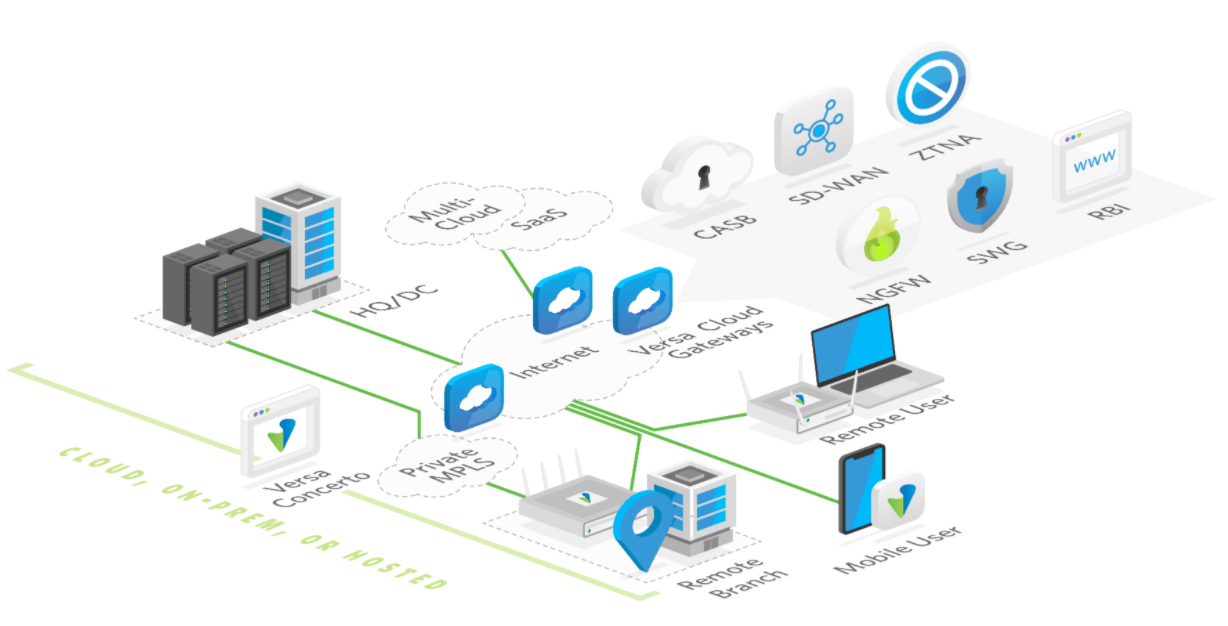
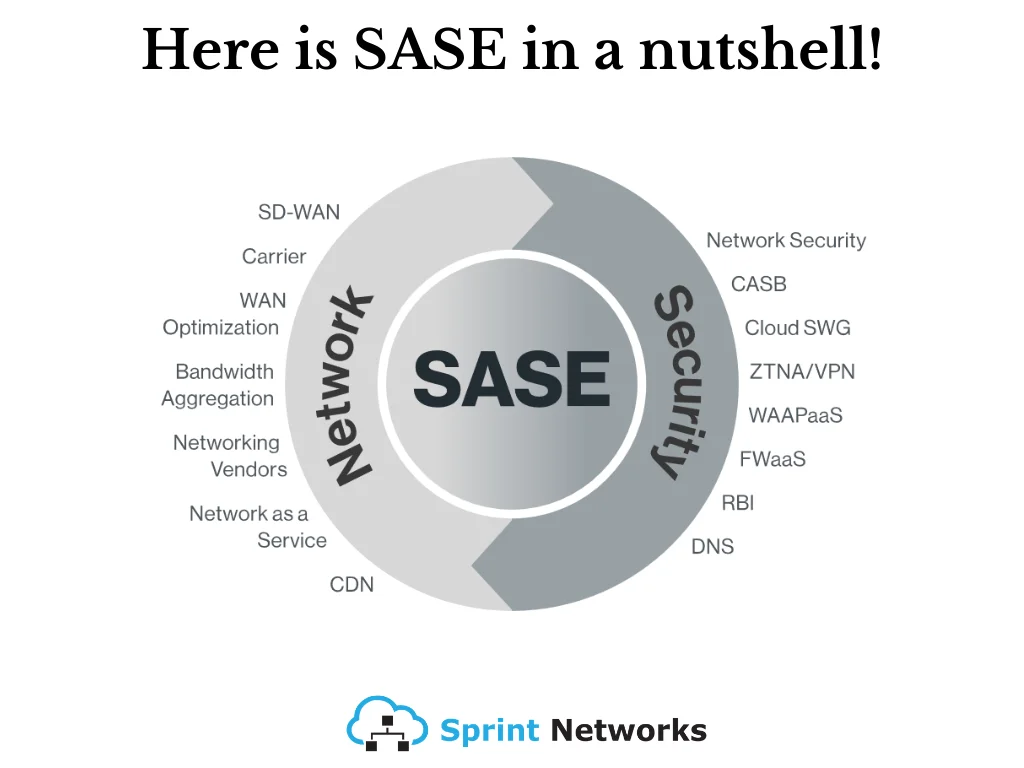
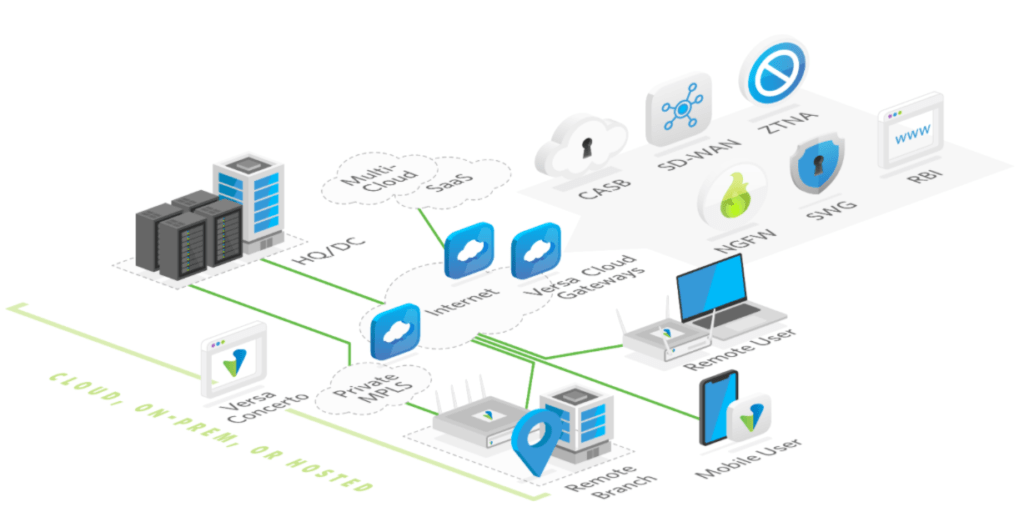
SASE is the result of two decades of churn that has been happening in the networking/cybersecurity space. It is the convergence of Wide Area Networking, or WAN, and network security services such as ZTNA, CASB, SWG, RBI and NGFWaaS.

Security is moving to the cloud with the digital transformation of businesses. This is driving the need for services to converge, in order to improve security, improve performance, reduce complexity, enhance the multi-cloud experience and thereby, transform the SD-WAN space.

Versa SASE Secure SD-WAN

What does Versa SASE architecture look like?

Versa SASE integrates security, networking, SD-WAN analytics within a single software operating system delivered via the cloud, on-premises, or as a blended combination of both.

SASE 1

How does SASE benefit my business?

The SASE model converges numerous networking and security functions–traditionally delivered in siloed point solutions–in a single, integrated cloud service. By converging with SASE, enterprises can:

•  Reduce costs and complexity
•  Provide centralized orchestration and real-time application optimization
•  Secure user access seamlessly
•  Reduce deployment time to a couple of minutes
•  Genuine multi-tenancy
•  Improve security by applying consistent policy
•  Policy based-automation
•  Increase network and security staff effectiveness with centralized management, a single pane of glass, delivered from the cloud.

Businesses that implement Versa SASE with a single, integrated software solution will see consistent policy implementation, granular visibility and control, reduced attack surfaces, dramatically lower latency, and unprecedented application performance.
SASE will see an astounding increase in adoption in 2021 all the way up till 2024, because of its benefits, integration, and ease of implementation. In a time when uncertainty is the norm, having certainty in how networking and security services are delivered – whether in the cloud, at a data center, branch offices, or to home offices while taking into context the user and device – is essential for business continuity and productivity.
Adoption of SASE is fundamental for business continuity to deliver consistent policies to protect access and optimize performance. SASE is the go-to solution for organizations wanting to transform their data networks, thereby creating more efficient and lean organizations.

To find out more about the solution, you can reach us atinfo@sprintnetworks.com

Versa Monitor 4

The need for companies in the APAC region to consider migrating to SD-WAN?

By Superfast IT Networks, SD-WAN No Comments

The Asia-Pacific region has been a late adopter of this technology, but that has not slowed down the pace of adoption.

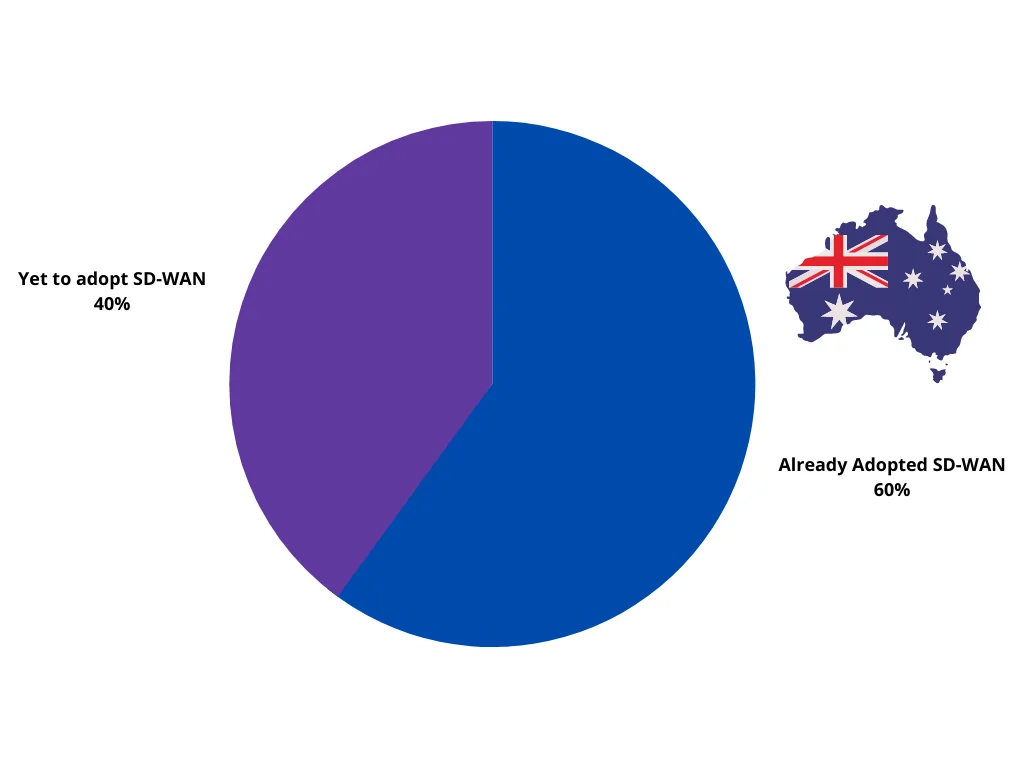
According to Global Data, the Australian uptake of SD-WAN has been relatively quick, with more than 60% of Australian IT companies having adopted it.

According to this report, one in three Australian IT companies will be migrating to SD-WAN in the next 12 months.

SD-WAN
The current state of SD-WAN in Australia
1 1
1 in every 3 companies to adopt SD-WAN in the next 12 months

So, why have companies in the region suddenly woken up to SD-WAN?

Well, the simple answer to this question is that SD-WAN is much better than a traditional WAN system.

Companies are quickly starting to realize the obvious and long-term business benefits this technology holds. We currently live in a cloud-centric world, where the adoption of a cloud-first strategy by companies, has resulted in an unseen explosion of WAN traffic. This results in management complexity, application performance issues and network vulnerability. As a result, companies aiming to enhance enterprise connectivity and transform their IT networks are adopting SD-WAN like never before.

Gone are the times when you had to make use of multiple devices to perform multiple network functions, leading to appliance sprawl, which eventually resulted in poor management of the network. With, SD-WAN you can now transform complex IT to simple IT or lean IT.

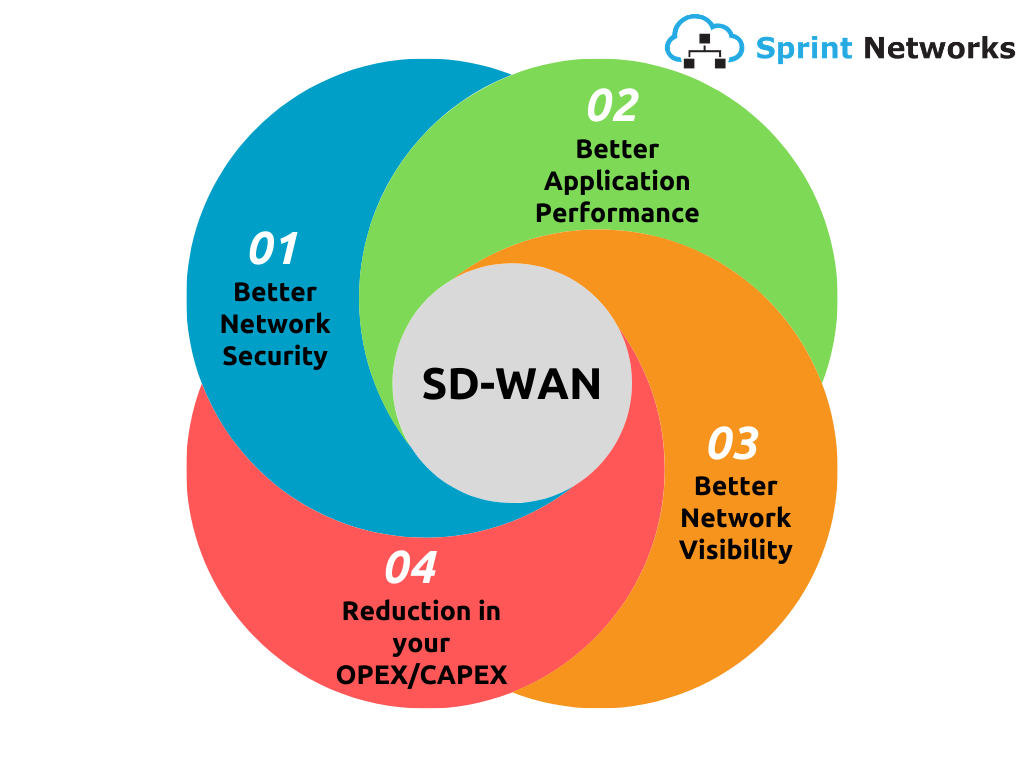
These are the four main reasons, why companies are adopting SD-WAN in the region:

  • Better network security
  • Better application performance
  • Better network visibility
  • Reduction in your OPEX/CAPEX
Gray Simple Cycle Diagram Chart 1

Challenges in migrating to SD-WAN

Some of the challenges, companies could face are:

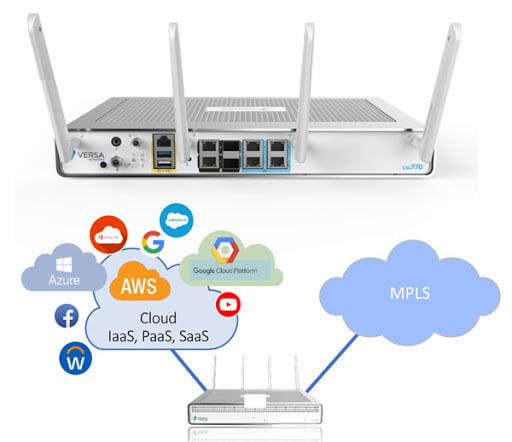
  • Managing current MPLS network- some organizations that have been using MPLS networks might find it difficult to manage them while transitioning to SD-WAN. Many organizations deploy SD-WAN as a hybrid network where MPLS is retained where required and introducing Broadband/4G LTE wherever necessary. The beauty of SD-WAN is that it can leverage any combination of transport services to connect users to their applications. It can also connect branch users directly to the internet over broadband, through a technology called Internet Breakout.
  • Selecting the right SD-WAN solution- this is the most crucial aspect of migrating to SD-WAN. To get this right, you need to understand the business requirements of the organization and also have a clear idea of what the organization seeks to achieve through the implementation of such a technology. These need to be communicate well

According to GlobalData, 20% of enterprises are interested in purchasing SD-WAN from an ISP, whereas 10% indicated the the purchasing directly from the vendor as their preferred choice

So, this is where Sprint Networks can step in and help your make a decision and see that it reaches fruition. We have tried and tested all the SD-WAN vendors out there and we can confidently recommend a solution based on your organizational requirements. 

Untitled design 29

You can reach out to us at- info@sprintnetworks.com, if you are among those companies planning an SD-WAN migration soon.